
Digital voice recorders, paired with comprehensive PDF manuals, offer convenient audio capture and management. These manuals, like those for Edic Tiny or Homder recorders, detail features and operation.
What is a Digital Voice Recorder?
Digital voice recorders are portable devices designed to capture audio, offering a modern alternative to traditional tape recorders. They convert sound into digital files, typically in formats like MP3 or WMA, facilitating easy storage and transfer to computers. Recorders like the Homder 32GB model utilize voice activation and scene presets (meeting, music, interview) for optimized recording.
These devices, often resembling small USB drives, boast significant memory capacity – up to 32GB or more – allowing for extended recording times, potentially exceeding 59 hours at 128kbps. The accompanying PDF manual, accessible via the recorder’s internal memory, provides detailed instructions for operation and software installation (e.g., RecManager.exe).
Importance of the PDF Manual
The PDF manual is crucial for unlocking the full potential of your digital voice recorder. It provides step-by-step guidance on connecting to a PC via USB, recognizing the device as a removable disk (MemoQ), and installing necessary software like RecManager.exe.
These manuals, often multilingual (English, German, French, Spanish), detail file management – copying, deleting, formatting – and playback options. Understanding the manual ensures proper use of features like line-in recording, music playback (MP3/WMA support), and navigating recording modes (LQ, SQ, HQ). It also covers troubleshooting common issues and warranty information, maximizing your user experience.
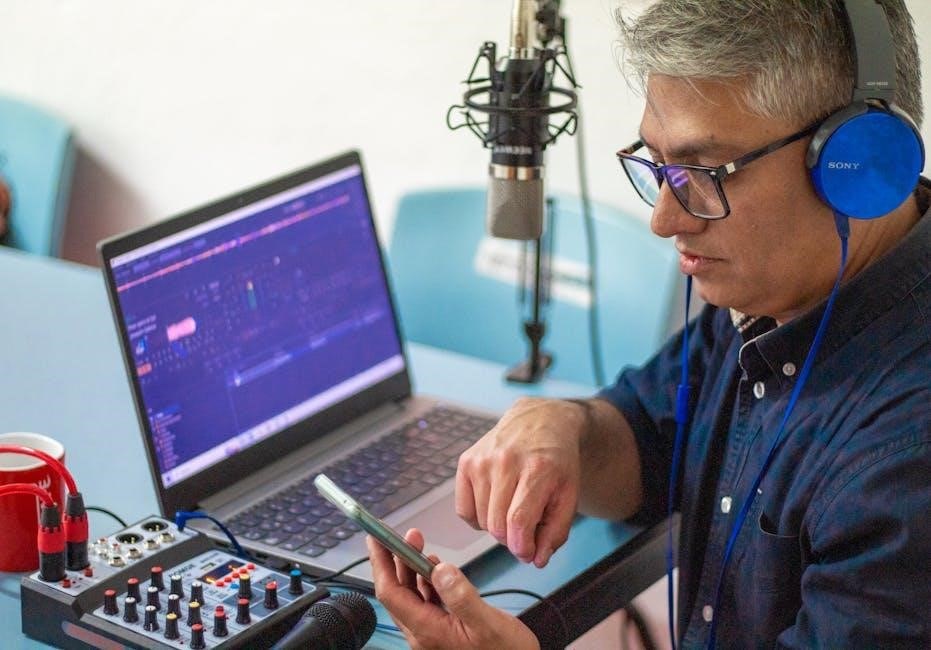
Understanding Your Recorder: Key Features
Digital voice recorders boast features like varied recording modes (LQ, SQ, HQ), microphone sensitivity settings, and scene presets for optimal audio capture.
Recording Modes: LQ, SQ, HQ
Digital voice recorders typically offer multiple recording modes to balance audio quality and file size. LQ (Low Quality), utilizing 32kbps MP3 format, prioritizes extended recording time with a smaller file; SQ (Standard Quality) provides a compromise between quality and storage capacity, suitable for general use.
HQ (High Quality) delivers superior audio fidelity, ideal for critical recordings like interviews or music, but consumes more memory. Selecting the appropriate mode depends on the recording environment and desired outcome. The 4GB memory can store up to 59 hours and 35 minutes at 128kbps MP3 stereo, demonstrating the impact of chosen quality.
Microphone Sensitivity & Scene Presets (Music, Meeting, Interview, Dictation)
Digital voice recorders enhance recording quality through adjustable microphone sensitivity and pre-defined scene presets. These presets optimize settings for specific environments. Music mode prioritizes fidelity for musical performances, while Meeting mode focuses on clear voice capture in conference settings.
Interview and Dictation modes further refine audio for focused conversations and speech-to-text applications, respectively. Adjusting microphone sensitivity allows users to tailor the recorder to varying sound levels, ensuring optimal clarity and minimizing background noise. Utilizing these features yields professional-sounding recordings.
Memory Capacity & Recording Time (e.g., 4GB, 32GB, 59hrs 35m at 128kbps MP3)
Digital voice recorders offer varying memory capacities, commonly 4GB or 32GB, directly impacting recording duration. A 4GB recorder can store up to 59 hours and 35 minutes of audio when utilizing the MP3 format at 128kbps stereo. Higher memory allows for extended recording times and more files.
Recording time is also influenced by the chosen audio quality setting (LQ, SQ, HQ) and file format. Understanding these specifications, detailed in the PDF manual, helps users maximize storage and balance quality with duration. Careful consideration ensures sufficient capacity for intended use.

Connecting to Your Computer
Connecting via USB allows PC access to recorder files. The device appears as a removable disk (MemoQ), enabling file transfer and software use.
USB Connection Procedure (Recorder to PC)
Establishing a connection between your digital voice recorder and your computer is straightforward. First, ensure the recorder’s recording switch is in the ‘stop’ position to prevent data corruption during transfer. Next, carefully connect the provided USB cable to the recorder’s USB port and then to an available USB port on your PC.
Upon successful connection, your computer should recognize the recorder as a removable disk. This typically appears as a new drive letter in your file explorer (like MemoQ). The recorder’s internal memory, containing the manual and voice recordings, will then be accessible for file management.
Removable Disk Recognition (MemoQ, Removable Disk)
When connecting your digital voice recorder via USB, your computer identifies it as a removable disk, similar to a USB flash drive. This may appear under different names, such as MemoQ, depending on your operating system. A new drive letter will be assigned, representing the recorder’s internal memory.
Double-clicking this new drive icon opens the recorder’s file system. You’ll find a VOICE folder containing your audio recordings. The PDF manual for models like Edic Tiny is also stored within the recorder’s internal memory, readily accessible for reference. Ensure safe removal of the device after use.
Locating and Running the Recorder Software (e.g., RecManager.exe)
After connecting your digital voice recorder, the associated software is typically found on the newly recognized removable disk. Look for an executable file, commonly named RecManager.exe, within the drive’s root directory. This software, detailed in the PDF manual, provides enhanced file management and audio control.
Double-click RecManager.exe to launch the application; It allows you to easily copy, delete, and playback recordings. The software interface, as described in manuals for devices like Edic Tiny, offers features beyond basic file transfer, streamlining your workflow.

File Management on PC
Digital voice recorder files, accessed via the removable disk (MemoQ), can be copied, deleted, played, or formatted using standard PC functions, as detailed in the PDF manual.
Copying Recordings to Your Computer
To transfer recordings from your digital voice recorder to a PC, connect the device via USB, ensuring the recording switch is in the stop position. The recorder will appear as a removable disk, often labeled “MemoQ,” within your computer’s file explorer. Double-click this disk to access the “VOICE” folder, which contains all your audio files.
Simply drag and drop these files, typically in MP3 or WMA format, to a desired location on your computer. The PDF manual provides detailed step-by-step instructions and troubleshooting tips for a smooth file transfer process, ensuring your important recordings are safely backed up.
Deleting Recordings from the Recorder
Removing unwanted recordings directly from the digital voice recorder frees up valuable memory space. Connect the recorder to your computer via USB, accessing it as a removable disk – usually “MemoQ” – and navigate to the “VOICE” folder. Within this folder, you can select individual files or batches for deletion, just like on a standard USB drive.
Alternatively, many recorders offer deletion options directly through their onboard menu system. The PDF manual provides specific instructions for both methods, detailing how to permanently erase files and maximize the recorder’s storage capacity for future use.
Playback Options on PC
Once recordings are copied to your computer, several playback options become available. Standard media players can handle MP3 and WMA formats commonly supported by these recorders. The included RecManager.exe software (or equivalent, as detailed in the PDF manual) often provides enhanced features like variable speed playback and audio enhancement tools.
These tools allow for clearer listening and easier transcription. The PDF manual will guide you through utilizing these features, ensuring optimal audio quality during playback. You can also utilize the computer’s built-in audio controls for basic playback functions.
Formatting the Recorder’s Memory
Formatting the recorder’s memory erases all recordings and data, returning it to a factory-fresh state. The PDF manual provides detailed instructions, typically accessed through the RecManager.exe software when the device is connected to your PC via USB. Before formatting, ensure all important recordings are backed up to your computer.
Treat formatting as a last resort for resolving persistent issues. The manual emphasizes that formatting will permanently delete all files. Follow the on-screen prompts carefully within the software to complete the process successfully, as outlined in the digital voice recorder’s PDF manual.

Software Features & Functionality
RecManager (or similar software) facilitates file management, supports MP3 and WMA formats, and enables voice activation recording, as detailed in the PDF manual.
Using RecManager (or equivalent software)
RecManager.exe, accessed via the removable disk (MemoQ) after USB connection, is central to managing recordings. This software allows users to effortlessly copy files to a PC, delete unwanted audio, and organize recordings within folders. The PDF manual provides detailed instructions on navigating the software’s interface, utilizing its playback controls, and customizing recording settings.
Users can leverage features like audio file conversion and tagging for improved organization. The software often includes options for adjusting playback speed and volume, enhancing the listening experience. Refer to the manual for specific instructions tailored to your recorder model, ensuring optimal software utilization and efficient file management.
Audio File Formats Supported (MP3, WMA)
Digital voice recorders commonly support MP3 and WMA audio file formats, offering a balance between file size and audio quality. The PDF manual details the specific encoding options available, such as bitrates (e.g., 128kbps) and stereo/mono settings. MP3 is widely compatible, ideal for playback across various devices, while WMA offers efficient compression.
Understanding these formats is crucial for optimizing storage and ensuring compatibility. The manual will explain how to select the desired format during recording or conversion within RecManager or similar software. Choosing the right format depends on your intended use and storage capacity needs.
Voice Activation Recording
Voice Activation Recording (VAR), detailed in the PDF manual, is a power-saving feature that automatically starts and stops recording based on detected sound levels. This prevents lengthy periods of silence from being recorded, conserving memory. The manual explains how to adjust the sensitivity threshold for VAR, ensuring it captures desired audio while ignoring background noise.
Properly configuring VAR is key to efficient recording. The RecManager software (or equivalent) allows users to fine-tune these settings. The PDF will guide you through optimizing VAR for different environments, like meetings or interviews, maximizing recording time and minimizing unwanted data.

Troubleshooting Common Issues
The PDF manual provides solutions for problems like PC recognition failures, playback issues, poor recording quality, and file corruption, ensuring smooth operation.
Recorder Not Recognized by PC
If your recorder isn’t recognized, the PDF manual stresses ensuring the recording switch is in the ‘stop’ position before connecting via USB. Verify the USB cable is securely connected to both the recorder and the computer.
The manual explains that the recorder should appear as a “MemoQ” (removable disk) in your system. If it doesn’t, try a different USB port or restart your computer. Check Device Manager for any driver issues. The PDF often includes troubleshooting steps specific to operating systems, guiding users through potential fixes for connection problems.
No Sound During Playback
If you experience no sound during playback, the PDF manual advises checking the volume level on both the recorder itself and your computer. Ensure the recorder isn’t muted. When using software like RecManager.exe (mentioned in the manual), verify the audio output device is correctly selected within the program’s settings.
The manual may also suggest testing with different headphones or speakers to rule out external audio issues. Confirm the audio file format (MP3, WMA) is supported by your playback software. A corrupted file, as addressed in the PDF, could also be the cause.
Low Recording Quality
The PDF manual highlights several factors impacting recording quality. First, check the selected recording mode – LQ, SQ, or HQ – with HQ offering the highest fidelity. Utilize the scene presets (Music, Meeting, Interview, Dictation) as the manual suggests, optimizing settings for the environment.
Microphone sensitivity, detailed in the PDF, should be adjusted appropriately; too low and the recording is faint, too high and it may distort. Ensure the recorder isn’t too far from the sound source. A full memory can also affect quality, so the manual recommends regular file management.
File Corruption Issues
The PDF manual addresses potential file corruption, advising against abruptly disconnecting the recorder during data transfer. Always use the proper USB disconnection procedure outlined within the document. Sudden power loss during recording or file saving can also cause corruption; ensure sufficient battery life.
If corruption occurs, the manual suggests attempting file recovery using the recorder’s software (like RecManager.exe). Regularly formatting the recorder’s memory, as detailed in the PDF, can prevent accumulated errors. Backing up recordings to your PC frequently is a crucial preventative measure, safeguarding against data loss.

Advanced Features
PDF manuals detail features like line-in recording, music playback (MP3/WMA support), and digital identity options, enhancing the recorder’s versatility.
Line-In Recording
PDF manuals thoroughly explain the line-in recording functionality, allowing users to capture audio from external devices. This feature expands the recorder’s capabilities beyond its built-in microphone. The manual details connecting an external audio source – such as a microphone or another recording device – to the recorder’s line-in port.
Instructions cover proper cable connections and adjusting recording levels for optimal audio quality. Users can leverage line-in recording for higher fidelity audio capture or to record sources not easily accessible with the internal microphone. The manual often includes diagrams illustrating the connection process and troubleshooting tips for common issues encountered during line-in recording.
Music Playback Functionality
PDF manuals clearly outline the music playback features of the digital voice recorder, highlighting supported formats like MP3 and WMA. Instructions detail how to transfer music files to the recorder’s memory via USB connection, utilizing its function as a portable music player. The manual explains navigating the music library, controlling playback (play, pause, skip), and adjusting volume levels.
Some recorders, as noted in manuals, support folder organization for efficient music management. Troubleshooting sections address potential issues like unsupported file types or playback errors. This functionality transforms the recorder into a versatile device beyond simple voice recording.
Digital Identity and Security
PDF manuals often briefly address digital identity considerations, though detailed security features aren’t always prominent. They may mention the importance of protecting recordings containing sensitive information. Some recorders offer basic password protection for access, detailed within the manual’s settings section. The manual clarifies data storage practices and potential risks associated with unauthorized access.
Information regarding data encryption, if available, is explained. Users are advised to regularly back up recordings to prevent data loss. The manual emphasizes responsible use and adherence to privacy regulations when recording conversations or personal data.

PDF Manual Navigation
PDF manuals feature a table of contents and search functionality for easy access to information. Users can also print the manual for offline reference.
Table of Contents
Digital voice recorder PDF manuals typically begin with a detailed table of contents, providing a structured overview of the document’s contents. This allows users to quickly locate specific sections, such as connecting to a PC, file management, or troubleshooting. Manuals for recorders like the Homder 32GB model, and those translated into multiple languages (English, German, French, Spanish), consistently employ this feature.
The table of contents often categorizes information by function – recording settings (LQ, SQ, HQ), software usage (RecManager.exe), and advanced features like line-in recording. A well-organized table of contents significantly enhances the user experience, streamlining access to vital operational details.
Search Functionality within the PDF
PDF manuals for digital voice recorders, such as the Homder or Edic Tiny models, almost universally include a search function. This invaluable tool allows users to quickly find specific keywords or phrases within the document. Instead of manually browsing the table of contents, users can search for terms like “RecManager.exe”, “MP3 format”, “line-in recording”, or “troubleshooting”.
Effective use of the search function dramatically improves efficiency when seeking information about recording modes (LQ, SQ, HQ), memory capacity, or resolving issues like PC recognition problems. It’s a crucial feature for navigating lengthy, multilingual manuals.
Printing the Manual
Digital voice recorder PDF manuals are easily printable for offline access and convenience. Whether it’s for an Edic Tiny, Homder, or another brand, most PDF viewers offer straightforward printing options. Users can select specific pages or print the entire document, ensuring a physical copy is available even without a computer.
Printing is particularly useful for quick reference during setup, troubleshooting, or when accessing information in environments without digital devices. Consider printing only necessary sections to conserve paper, focusing on areas like USB connection procedures or RecManager software usage.

Language Support in Manuals
PDF manuals often support multiple languages – English, German, French, Spanish, and more – catering to a global user base for digital voice recorders.
Multilingual Manuals (English, German, French, Spanish, etc.)
Digital voice recorder manuals frequently demonstrate a commitment to accessibility through multilingual support. As evidenced by examples like the Homder recorder’s documentation, translations are provided in key languages including English, German, French, and Spanish. This broad language coverage ensures users across diverse regions can readily understand the device’s operation and features.
The availability of manuals in multiple languages minimizes barriers to entry and enhances the overall user experience, allowing individuals to confidently utilize the recorder’s functionalities regardless of their native tongue. This is crucial for international products.
Understanding Language-Specific Terminology
PDF manuals for digital voice recorders require careful attention to language-specific terminology. Direct translations aren’t always sufficient; nuanced terms relating to audio recording, file formats (like MP3 or WMA), and computer connectivity must be accurate. For instance, “removable disk” may have differing equivalents in German (Wechseldatenträger) or French (disque amovible).
Ensuring consistent and correct terminology across all language versions is vital for clarity and avoids user confusion. Proper localization goes beyond simple translation, adapting the language to cultural contexts.

Safety Precautions & Warranty Information
PDF manuals detail crucial battery safety guidelines, operating temperature ranges, and comprehensive warranty details, including registration procedures for your recorder.
Battery Safety
PDF manuals emphasize proper battery handling for optimal performance and longevity. Avoid exposing the recorder to extreme temperatures, as this can damage the battery and potentially cause hazards. Do not attempt to disassemble or modify the battery pack. Only use the specified charger provided with the device or recommended in the manual.
Dispose of used batteries responsibly, following local regulations for electronic waste. Never incinerate batteries. If the battery leaks, avoid contact with skin and eyes; rinse immediately with water and seek medical attention. Regularly check the battery compartment for corrosion.
Operating Temperature
PDF manuals clearly state the recommended operating temperature range for your digital voice recorder to ensure reliable performance. Exceeding these limits can lead to malfunctions, reduced battery life, or even permanent damage to the device. Avoid prolonged exposure to direct sunlight or extremely cold environments.
Typically, recorders function optimally between 0°C and 40°C (32°F and 104°F). Storing the device outside this range for extended periods is also discouraged. The manual may detail specific temperature considerations for charging the battery. Always allow the recorder to acclimate to room temperature before use after exposure to extreme conditions.
Warranty Details & Registration
Your digital voice recorder’s PDF manual contains crucial warranty information, outlining the coverage period and what defects are included. Carefully review the terms and conditions to understand your rights as a consumer. Many manufacturers require product registration to activate the warranty, often done online through a link provided in the manual.
Keep your proof of purchase safe, as it’s essential for any warranty claim. The manual will detail the process for submitting a claim and where to send the recorder for repair. Failure to register or adhere to the outlined procedures may void your warranty coverage.