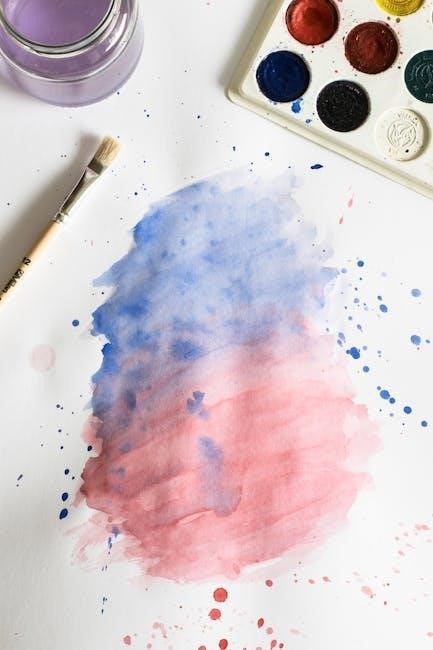
Watercolour painting offers a unique artistic journey, blending simplicity with expressive potential. Numerous resources, including watercolour painting techniques PDFs,
provide foundational knowledge for beginners and seasoned artists alike. These guides detail essential techniques, from basic washes to complex layering,
empowering you to create stunning artwork. Explore free tutorials and downloadable PDFs to master mixing colours, painting simple subjects like leaves
and flowers, and building a solid foundation in modern watercolour painting. Discover step-by-step exercises covering landscapes, skies, and various textures.
What is Watercolour Painting?
Watercolour painting is a captivating art form utilizing pigments suspended in a water-based solution. Unlike oils or acrylics, its transparency allows light to reflect through the layers, creating luminous and delicate effects. Often, introductory watercolour painting techniques PDFs emphasize this unique characteristic. The medium’s fluidity demands a different approach, focusing on controlling washes and embracing happy accidents.
These PDFs frequently detail how watercolour’s behaviour differs from other paints, highlighting the importance of paper choice and brush control; Watercolour painting isn’t simply about applying colour; it’s about understanding water’s interaction with pigment and paper. Mastering basic techniques, as outlined in many free tutorials, unlocks the potential for expressive and breathtaking artwork. It’s a journey of learning to work with the water, not against it, to achieve desired results.
Benefits of Learning Watercolour Techniques
Embarking on a journey to learn watercolour techniques unlocks a wealth of artistic and personal benefits. Accessing watercolour painting techniques PDFs provides a structured pathway to skill development, fostering creativity and self-expression. Watercolour encourages mindful observation, enhancing your ability to perceive colour, light, and form. The medium’s portability makes it ideal for plein air painting, connecting you with nature.
Furthermore, mastering watercolour cultivates patience and adaptability, as controlling the fluid medium requires finesse. Many free tutorials and downloadable guides emphasize the therapeutic qualities of watercolour, offering a relaxing and meditative outlet. Learning these techniques elevates your artistic capabilities, allowing you to create stunning artwork and experience the joy of artistic accomplishment. It’s a rewarding pursuit for artists of all levels.
Essential Watercolour Supplies
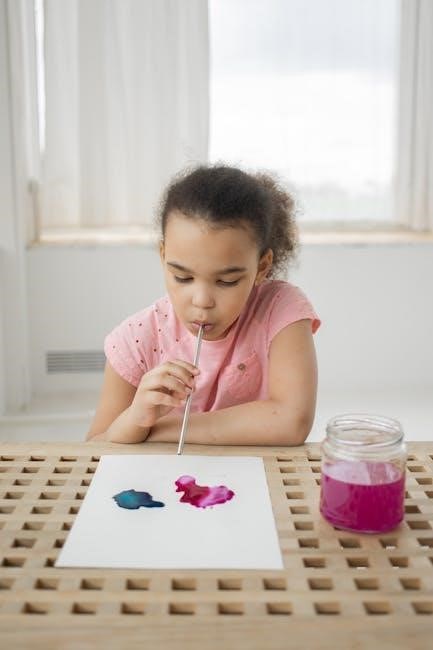
Successful watercolour painting, guided by watercolour painting techniques PDFs, relies on quality materials: paints, brushes, and paper – each impacting results significantly.
Watercolour Paints: Types and Quality
Understanding watercolour paint types is crucial, often detailed within watercolour painting techniques PDFs. Paints come in tubes, pans, and liquids, each offering unique advantages; Tube colours generally provide richer pigmentation and are ideal for larger washes, while pan sets are portable and convenient for plein air painting. Liquid watercolours are known for their vibrant intensity.
Quality significantly impacts results; student-grade paints contain more fillers, resulting in less vibrant colours and reduced lightfastness. Professional-grade paints boast higher pigment concentrations, offering superior colour intensity, blending capabilities, and archival quality. Pigment information (indicated on the tube/pan) reveals a paint’s lightfastness and transparency. Exploring these nuances, as explained in instructional PDFs, empowers artists to select paints aligning with their artistic goals and budget.
Brushes for Watercolour: Shapes and Sizes
Selecting the right brushes is fundamental, a topic thoroughly covered in many watercolour painting techniques PDFs. Brush shapes dramatically influence the effects achievable. Round brushes are versatile, excellent for detail work and washes. Flat brushes are ideal for broad strokes, washes, and creating sharp edges. Filbert brushes combine the benefits of both, offering rounded edges for soft blending.
Brush sizes range from tiny detail brushes (000) to large mop brushes. Synthetic brushes are affordable and durable, while natural hair brushes (sable, squirrel) hold more water and offer superior control. Understanding hair type and shape, as detailed in instructional materials, allows artists to choose brushes suited to their style and desired techniques. Experimentation is key to discovering personal preferences.
Watercolour Paper: Weight, Texture, and Composition
Watercolour painting techniques PDFs consistently emphasize the importance of paper choice. Paper weight, measured in pounds (lbs) or grams per square meter (gsm), impacts how well it handles water. Lighter weights (140lb/300gsm) are suitable for practice, while heavier weights (300lb/640gsm) minimize buckling. Texture, or ‘tooth’, affects paint flow and granulation. Hot press paper is smooth, ideal for detailed work. Cold press offers a textured surface, versatile for various techniques.
Rough paper has significant texture, enhancing granulation effects. Composition—cotton content—is crucial; 100% cotton paper is archival and durable. Wood pulp papers are more affordable but less resistant to damage. Understanding these factors, as outlined in guides, ensures optimal results and longevity for your artwork.
Basic Watercolour Techniques
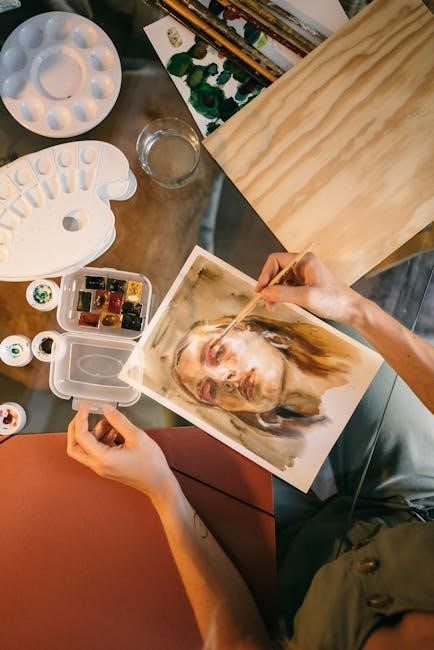
Watercolour painting techniques PDFs introduce foundational skills like wet-on-wet, wet-on-dry, and dry brush methods. Mastering these techniques unlocks expressive possibilities for beginners and beyond.
Wet-on-Wet Technique
Wet-on-wet is a cornerstone watercolour technique, beautifully demonstrated in many watercolour painting techniques PDFs. It involves applying wet paint to already dampened paper. This creates soft, diffused edges and allows colours to blend seamlessly, ideal for skies, backgrounds, and atmospheric effects. The key is controlling the paper’s wetness – too wet, and colours will bleed uncontrollably; too dry, and the effect is lost.
PDF guides often illustrate how to achieve this by first applying a clear water wash to the desired area. Then, while the paper remains glistening, colours are dropped in, spreading and mingling organically. Experimentation is crucial! Different paper textures and paint consistencies yield varied results. Mastering wet-on-wet unlocks a fluid, expressive style, perfect for capturing light and mood. It’s a foundational skill for any watercolour artist.
Wet-on-Dry Technique
The wet-on-dry technique, frequently detailed in watercolour painting techniques PDFs, offers precision and control. This method involves applying wet paint to dry paper, resulting in sharp, defined edges. It’s excellent for detailed work, layering, and creating crisp shapes. Unlike the fluid nature of wet-on-wet, wet-on-dry allows for greater accuracy in colour placement and form.
Many PDF tutorials emphasize building up layers using this technique, starting with light washes and gradually adding darker tones. This layering approach creates depth and dimension. Mastering brush control is vital, as the paint won’t spread as readily. It’s a fundamental skill for rendering textures, details, and achieving realistic effects. Practice controlling water content in your brush for optimal results, as demonstrated in comprehensive guides.
Dry Brush Technique
The dry brush technique, often illustrated in watercolour painting techniques PDFs, creates textured effects by using a brush with very little water. Dragging a nearly dry brush across the paper’s surface leaves broken colour, ideal for depicting rough textures like wood, fur, or stone. This technique relies on the paper’s texture to catch the pigment, resulting in a granular, uneven application.
PDF guides frequently showcase how varying brush pressure and the amount of paint loaded onto the brush influence the texture’s intensity. It’s particularly effective on textured watercolour paper. Experiment with different brush types – stiffer brushes work best. Mastering this technique adds visual interest and realism to your paintings, offering a unique contrast to smoother washes. It’s a versatile method for adding subtle details and character.
Lifting Colour
Lifting colour, a crucial technique detailed in many watercolour painting techniques PDFs, involves removing wet or damp paint from the paper to create highlights, textures, or correct mistakes. This is achieved using a clean, damp brush, a paper towel, or a sponge. The timing is critical; lifting is most effective while the paint is still wet, but can also be done on slightly damp areas.
PDF resources often demonstrate various lifting methods, from gentle blotting to more aggressive scrubbing for dramatic effects. Different paper types respond differently – smoother papers are harder to lift from. Mastering this technique allows for greater control and the creation of luminous effects. It’s an essential skill for achieving depth and realism in watercolour paintings, offering a pathway to refine and enhance your artwork.
Intermediate Watercolour Techniques
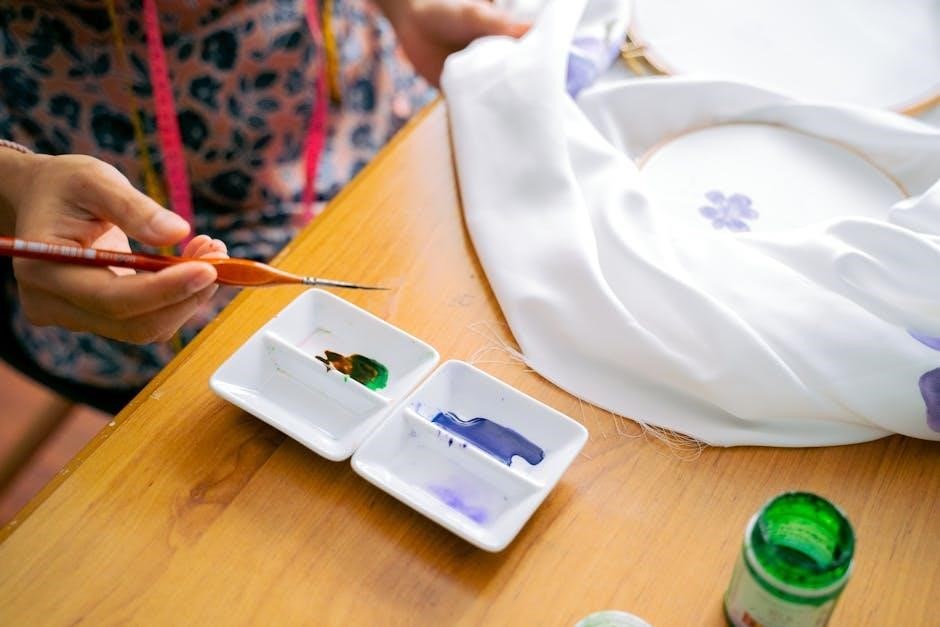
Watercolour painting techniques PDFs unlock advanced skills like layering, blending, and masking. Explore glazing, salt textures, and mastering nuanced colour transitions for expressive results.
Layering and Glazing
Layering and glazing are fundamental watercolour painting techniques, often detailed within comprehensive PDF guides. Layering involves applying successive washes of colour, allowing each to dry before adding the next, building depth and complexity. Glazing, a specific type of layering, utilizes transparent washes to modify underlying colours, creating subtle shifts and luminous effects.
Watercolour techniques PDFs emphasize the importance of patience; rushing the process can lead to muddy results. Begin with light washes, gradually increasing colour intensity with each layer. Understanding colour theory is crucial – complementary colours can neutralize each other, while analogous colours create harmony. Mastering these techniques allows artists to achieve realistic textures, atmospheric perspective, and captivating visual interest in their paintings. Practice exercises found in these guides help refine brush control and colour mixing skills.
Blending and Gradation
Blending and gradation are essential watercolour painting techniques, frequently explored in detailed PDF resources. These techniques create smooth transitions between colours, mimicking natural light and form. Blending involves softening edges where colours meet, while gradation refers to a gradual change in colour value, from light to dark or vice versa.
Many watercolour techniques PDFs demonstrate methods like wet-on-wet blending, where colours flow seamlessly into each other on damp paper. Controlling water content is key – too much water results in uncontrolled blooms, while too little creates harsh lines. Practice exercises often focus on creating smooth gradients for skies or subtle shading on objects. Mastering these skills enhances realism and adds depth to watercolour paintings, allowing artists to capture nuanced effects of light and shadow.
Masking Techniques
Masking techniques are invaluable in watercolour painting, allowing artists to preserve white areas or specific shapes while applying washes. Numerous watercolour painting techniques PDFs detail the use of masking fluid – a latex-based liquid applied before painting, which is peeled off once the paint is dry, revealing the protected area.
Alternatively, artists can utilize masking tape or stencils for precise edges. These PDF guides often showcase how masking fluid is ideal for intricate details like highlights in water or foliage, while tape excels at creating clean lines for architectural elements. Proper application and removal are crucial to avoid tearing the paper. Mastering masking expands creative possibilities, enabling complex compositions and layered effects with greater control and precision.
Salt Texture Effects
Salt texture effects offer a fascinating way to introduce organic, crystalline patterns into watercolour paintings. Many watercolour painting techniques PDFs demonstrate how sprinkling salt – typically coarse sea salt or rock salt – onto wet washes creates unique textures as the salt absorbs the pigment;
The resulting patterns mimic snow, stars, or weathered surfaces, adding depth and visual interest. Different salt types yield varying effects; finer salts produce subtle textures, while coarser salts create more pronounced crystals. PDF guides emphasize timing – applying salt while the wash is still damp is key. Once dry, the salt is brushed away, revealing the textured surface. Experimentation with salt application and wash intensity unlocks a diverse range of artistic possibilities.
Advanced Watercolour Techniques
Watercolour painting techniques PDFs unlock mastery through granulation, splattering, scumbling, and lifting preparation—skills for nuanced, expressive artwork and refined control.
Granulation
Granulation, a captivating watercolour technique, involves utilizing pigments that naturally separate, creating a textured, speckled effect reminiscent of stone or sand. Many watercolour painting techniques PDFs dedicate sections to mastering this effect, explaining how certain pigments – often those containing larger particles – resist even distribution on the paper.
Achieving granulation requires understanding paper texture; rougher papers enhance the effect. Wet-on-wet application is crucial, allowing pigments to settle and separate organically. Controlling water-to-pigment ratios is also key – more water encourages separation. Experimentation with different pigment combinations, as detailed in instructional PDFs, reveals unique granular patterns. This technique adds depth and realism, particularly when painting landscapes, rocks, or weathered surfaces, elevating your artwork with subtle complexity.
Splattering and Spattering
Splattering and spattering are dynamic watercolour techniques used to introduce texture and a sense of energy into paintings. Numerous watercolour painting techniques PDFs demonstrate these methods, explaining the subtle differences between them – splattering typically involves flicking paint from a brush, while spattering uses a toothbrush or other tool.
Controlling the effect requires practice; varying the paint consistency and the force of the flick influences the size and density of the splatters. Masking areas can protect portions of your work, creating defined shapes amidst the randomness. These techniques are excellent for depicting foliage, stars, or adding a distressed aesthetic. Many PDFs emphasize using high-quality paper to prevent buckling and ensure the splatters adhere properly, resulting in a vibrant and textured finish.
Scumbling
Scumbling is a watercolour technique involving applying broken, overlapping layers of colour, creating a textured and atmospheric effect. Many watercolour painting techniques PDFs illustrate this method, often describing it as a ‘dry brush’ variation with a more chaotic application. It’s ideal for depicting rough surfaces like rocks, bark, or distant foliage, adding depth and visual interest.
The key to successful scumbling lies in using a relatively dry brush and applying light pressure, allowing the texture of the paper to show through. Layering different hues enhances the complexity and realism of the effect. PDFs often recommend practicing on scrap paper to master the brush control needed for consistent results. This technique adds a unique, painterly quality to your work, moving beyond smooth washes.
Using Lifting Preparation
Lifting preparation, a technique detailed in many watercolour painting techniques PDFs, involves applying a masking fluid or wax resist before painting to preserve white areas or highlights. This allows for controlled colour application around these protected zones, enabling intricate details and clean edges. The preparation prevents paint from adhering to the designated areas, facilitating easy removal later.

PDF guides emphasize the importance of fully drying the lifting preparation before applying watercolour, preventing smudging or mixing. Once the painting is complete, the preparation is gently removed, revealing the untouched paper beneath. This method is particularly useful for creating bright reflections, delicate foliage, or complex patterns. Mastering this technique expands your control and precision in watercolour painting.
Specific Subject Painting Techniques
Watercolour painting techniques PDFs often dedicate sections to specific subjects like skies, landscapes, and water. These resources demonstrate how to adapt
basic techniques to realistically portray diverse elements, enhancing artistic expression.
Painting Skies and Clouds
Watercolour painting techniques PDFs frequently emphasize skies and clouds due to their atmospheric nature and the medium’s suitability for capturing light and form. Mastering these elements requires understanding wet-on-wet techniques for soft, blended transitions, crucial for realistic cloud formations.
Many guides detail how to create varied cloud types – cumulus, stratus, cirrus – through layering and lifting colour. Achieving convincing skies involves careful colour mixing, often utilizing diluted blues, purples, and pinks to represent atmospheric perspective.
PDF resources often showcase step-by-step demonstrations of painting sunsets, stormy skies, and clear blue days, highlighting the importance of controlling water-to-paint ratios for different effects. Learning to paint skies effectively elevates entire landscape paintings, adding depth and realism.
Painting Landscapes
Watercolour painting techniques PDFs often dedicate significant sections to landscape painting, recognizing its popularity and complexity. These resources typically begin with foundational exercises, like establishing perspective and creating depth through layering washes. Many guides offer complete, step-by-step projects, such as spring landscape scenes, ideal for beginner to intermediate artists.
PDFs emphasize techniques for rendering various landscape elements – rocks, trees, waterfalls, and oceans – each requiring specific brushwork and colour palettes. Understanding how to depict reflections and atmospheric perspective is crucial, often demonstrated through detailed illustrations.
These resources also cover techniques for suggesting texture and form, utilizing dry brush work and masking fluid to achieve realistic details. Mastering these skills allows artists to capture the beauty and nuance of natural landscapes.
Painting Water and Reflections
Watercolour painting techniques PDFs frequently address the challenges of depicting water and its reflections, a subject demanding careful observation and nuanced application of techniques. These guides often detail how to create the illusion of depth and movement, utilizing soft washes and graded tones to represent water’s surface.
PDF resources emphasize the importance of accurately portraying reflections, noting that they are rarely perfect mirror images; instead, they are distorted and softened by ripples and waves. Techniques like lifting colour and using masking fluid are demonstrated to achieve realistic effects.
Many tutorials showcase methods for painting various water types – calm lakes, turbulent oceans – and incorporating elements like light and shadow to enhance realism. Mastering these skills elevates landscape paintings significantly.
Resources for Further Learning (PDFs & Tutorials)
Numerous watercolour painting techniques PDFs and online tutorials offer comprehensive guidance. Explore free downloadable resources for foundational skills and advanced techniques, enhancing your artistic journey.
Free Watercolour Painting PDFs
Embarking on a watercolour journey doesn’t require expensive resources! A wealth of free watercolour painting techniques PDFs are readily available online, offering structured learning paths for all skill levels. These downloadable guides often cover fundamental concepts like paint properties, brush selection, and paper types, providing a solid base for beginners.
Many PDFs feature step-by-step exercises, guiding you through basic washes, colour mixing, and simple subject painting – think delicate leaves or vibrant flowers. More advanced PDFs delve into techniques like layering, glazing, and creating realistic textures for landscapes and skies. Look for comprehensive resources detailing how to paint specific elements like clouds, waterfalls, or even portraits. Remember to check for PDFs offering exercises to improve your skills, and always be mindful that screen colours may vary from printed results.
Online Watercolour Tutorials
Complementing free watercolour painting techniques PDFs, a vast collection of online tutorials provides dynamic visual learning experiences. These tutorials often demonstrate techniques in real-time, allowing you to observe brushstrokes, colour blending, and layering processes directly. Many platforms offer beginner-friendly introductions to watercolour basics, covering essential supplies and fundamental washes.
Intermediate and advanced tutorials explore complex techniques like glazing, dry brushing, and creating realistic textures. Search for tutorials focusing on specific subjects – landscapes, skies, water reflections – to refine your skills. Combining PDF guides with video tutorials offers a holistic learning approach, reinforcing concepts and providing practical demonstrations. Remember to practice alongside the tutorials, and don’t hesitate to pause and rewind to master each step!
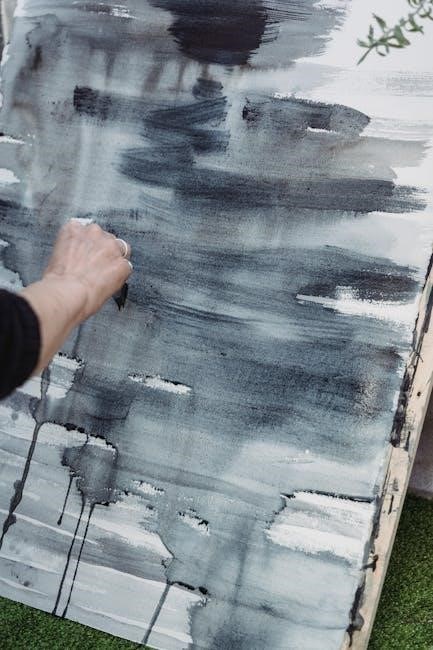
Troubleshooting Common Watercolour Problems
Even with comprehensive watercolour painting techniques PDFs and tutorials, challenges inevitably arise. Common issues include muddy colours, uneven washes, and paper buckling. Muddy colours often result from overmixing or using dirty water – regularly refresh your palette! Uneven washes can be addressed by tilting your paper and applying consistent pressure.
Buckling occurs when the paper absorbs too much water; using heavier weight paper (140lb or higher) and stretching or taping it to a board can prevent this. Backruns (cauliflowers) happen when wet paint flows into a drier area – control water flow and allow layers to dry completely. Many online resources and PDF guides dedicate sections to troubleshooting, offering solutions and preventative measures for these frequent watercolour hurdles.